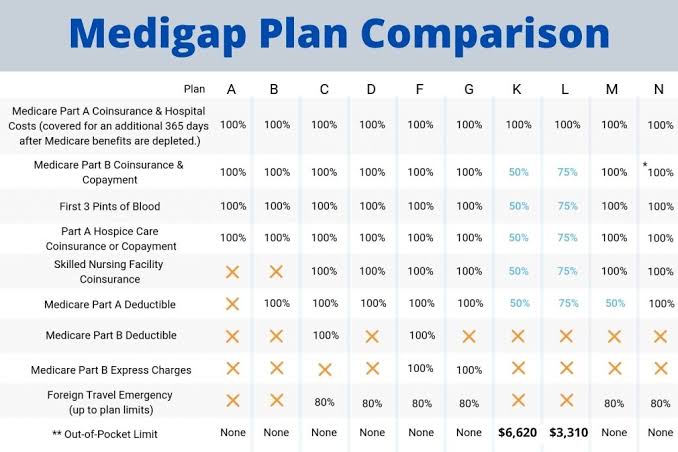
Selecting a Medigap policy requires understanding how each plan stacks up—not just in terms of cost, but in terms of actual coverage. For many new enrollees, Medicare Plan G emerges as the leading option once they begin comparing benefits side by side. This guide explores how Plan G compares to other Medigap plans and what the data says about its growing popularity.
How Are Medigap Plans Structured?
Medigap plans are standardized across most states, meaning each plan type offers the same core benefits regardless of which insurer sells it. Plans are labeled by letters—A, B, D, G, K, L, M, and N—and each covers a different combination of Medicare cost-sharing gaps.
This standardization makes comparison straightforward: the differences lie in which gaps each plan fills, not in how individual insurers define coverage.
How Does Medicare Plan G Compare to Plan N?
Plan N is the most common alternative to Plan G. Both are comprehensive, but there are meaningful differences:
Part B excess charges: Plan G covers them; Plan N does not. Excess charges occur when a provider does not accept Medicare assignment and bills above the Medicare-approved amount.
Copayments: Plan N requires small copayments for some office visits and emergency room visits; Plan G does not.
Premiums: Plan N typically carries a lower monthly premium than Plan G, making it appealing to healthier enrollees who visit doctors less frequently.
Choose Plan G if you want complete cost predictability and see specialists regularly.
Choose Plan N if you’re generally healthy, want lower premiums, and are comfortable with occasional copayments.
How Does Medicare Plan G Compare to Plan K and Plan L?
Plans K and L are cost-sharing plans, meaning they cover only a portion of certain benefits rather than the full amount. These plans also have annual out-of-pocket limits.
Plan K covers half of several key benefits.
Plan L covers three-quarters of those same benefits.
Both plans carry lower premiums but expose enrollees to more out-of-pocket costs throughout the year. For enrollees who prioritize maximum coverage, Plan G offers far more comprehensive protection.
Frequently Asked Questions About Medicare Plan G Comparisons
Why is Medicare Plan G more popular than Plan A or Plan B?
Plans A and B cover fewer gaps than Plan G. Plan A covers the basics—coinsurance and copayments—but excludes the Part A deductible, skilled nursing coinsurance, and foreign travel emergency coverage. Plan G fills all of these gaps (except the Part B deductible), making it substantially more protective.
Is there a high-deductible version of Medicare Plan G?
Yes. High-Deductible Plan G is available and carries a lower monthly premium. However, enrollees must meet a set annual deductible before Plan G benefits begin. This option is well-suited for those who want catastrophic protection at a lower regular cost.
Does Medicare Plan G cover dental, vision, or hearing?
No. Like all Medigap plans, Plan G does not cover dental, vision, or hearing services. Enrollees who want this type of coverage should look into standalone supplemental plans designed for those specific needs.
Which states standardize Medigap plans differently?
Massachusetts, Minnesota, and Wisconsin have their own Medigap standardization systems. If you live in one of these states, the lettered plan structure may differ. Consulting a licensed agent in your state is advisable.
Can I switch from another Medigap plan to Medicare Plan G later?
In most states, switching Medigap plans after your initial Open Enrollment Period means going through medical underwriting. Insurers can review your health history and may charge more or deny coverage. Enrolling in Plan G during your Open Enrollment Period avoids this entirely.
Choosing the Right Medigap Plan for Your Needs
Comparing Medigap plans doesn’t have to be complicated. The key is matching the plan’s coverage structure to your health usage patterns and financial priorities. For new enrollees seeking broad, predictable protection, Plan G consistently holds its own against every alternative in the Medigap landscape.